
One of the most effective strategies for increasing online exposure and drawing in organic visitors is search engine optimization, or SEO. However, creating an effective SEO plan may be challenging, particularly in light of the ever-evolving search engine algorithms and growing competition.
Businesses are using clever web technologies in 2026 to streamline and improve their SEO tactics. These technologies provide more effective keyword analysis, content optimization, ranking tracking, and performance monitoring for marketers.
An organized plan created to increase a website’s presence in search engine results is known as an SEO strategy. By improving the technical functionality, user experience, and content of websites, the objective is to boost organic traffic.
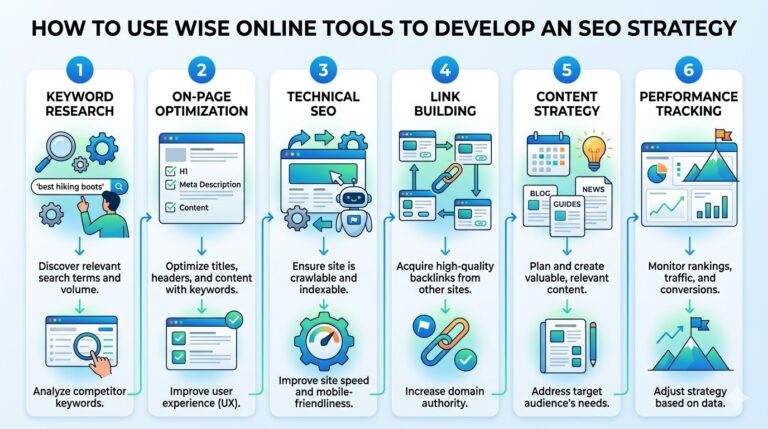
A strong SEO strategy typically includes:
Smart online tools make it easier to manage these components efficiently.
Keyword research is the foundation of any SEO strategy. It helps identify the search terms your target audience is using.
Smart SEO tools can help you:
By targeting the right keywords, businesses can attract more relevant traffic to their websites.
Understanding your competitors’ SEO strategies can reveal valuable insights and opportunities.
SEO analysis tools allow marketers to:
This information helps businesses refine their own strategies and stay competitive in search rankings.
High-quality content plays a critical role in SEO success. Smart content optimization tools assist marketers in creating search-engine-friendly content.
These tools can help with:
Optimized content increases the chances of ranking higher in search engine results.
Technical SEO ensures that search engines can easily crawl and index your website.
Smart SEO tools can identify technical issues such as:
Fixing these issues improves website performance and search engine rankings.
Backlinks are one of the most important ranking factors for search engines. They signal credibility and authority.
Smart tools can help businesses:
A strong backlink strategy improves domain authority and search visibility.
Tracking SEO performance is essential for understanding what works and what needs improvement.
SEO analytics tools allow marketers to monitor:
Real-time insights help businesses adjust their SEO strategies and improve results.
Automation is becoming an essential part of modern SEO strategies. Smart tools can automate several tasks, including:
Automation saves time and allows marketers to focus on strategic improvements.
Using smart online tools offers several advantages for businesses building an SEO strategy.
Improved Efficiency
Automation reduces manual work and speeds up SEO processes.
Better Data Insights
Advanced analytics provide deeper insights into performance and opportunities.
Competitive Advantage
Businesses can identify new opportunities before competitors.
Scalable SEO Growth
Smart tools allow businesses to manage larger SEO campaigns efficiently.
When building an SEO strategy, businesses should avoid common mistakes such as:
Using smart SEO tools helps prevent these mistakes and improves overall strategy effectiveness.
SEO is becoming increasingly data-driven and technology-focused. AI-powered tools are now capable of predicting trends, identifying ranking opportunities, and optimizing content automatically.
As search engines continue to evolve, businesses that leverage smart SEO tools will have a significant advantage in maintaining visibility and driving organic growth.
Building an effective SEO strategy requires careful planning, data analysis, and consistent optimization. Smart online tools simplify this process by providing powerful insights, automation, and performance tracking.
By using these tools to conduct keyword research, optimize content, improve technical SEO, and monitor performance, businesses can build a strong SEO strategy that drives long-term organic traffic and growth.
In the competitive digital landscape of 2026, leveraging smart SEO tools is essential for achieving sustainable online success.
To deliver innovative, scalable, AI, and human-centered technology solutions that empower businesses to thrive in a digital-first economy
1129 Northern Blvd., Suite 404, Manhasset, New York 11030
Privacy Policy | Team of Use | Cache © 2026 All rights reserved