
8 min read
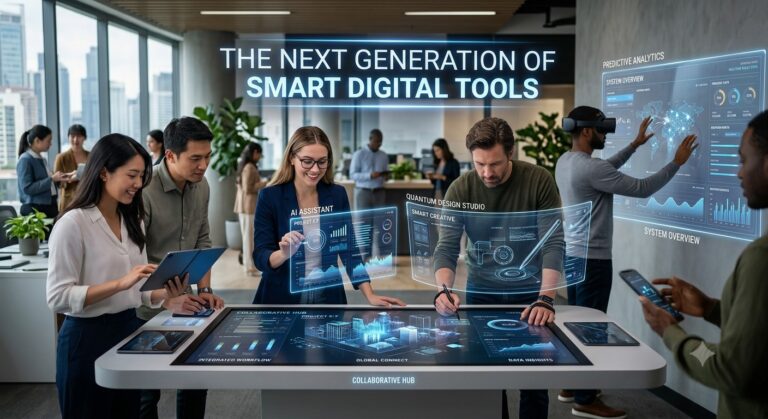
Digital transformation is no longer just about moving business processes online. Today, organizations are entering a new era powered by smart digital tools that use artificial intelligence, automation, cloud computing, and real-time data analytics to improve productivity and decision-making. The next generation of these tools is designed not only to assist users but also to anticipate needs, automate repetitive tasks, and deliver highly personalized experiences.
For businesses of all sizes, adopting the next generation of smart digital tools can lead to faster operations, lower costs, improved customer engagement, and a stronger competitive advantage.
Smart digital tools are software applications and platforms that combine advanced technologies such as:
Unlike traditional software, smart tools can learn from data, adapt to user behavior, and continuously improve their performance over time.
AI-Powered Intelligence
Core Feature
Modern digital tools can analyze massive amounts of data in seconds and provide actionable insights.
Examples
High Impact
Advanced Automation
Efficiency
Next-generation tools automate workflows that previously required significant human effort.
Data entry
Email scheduling
Social media posting
Lead qualification
Report generation
Benefit: Employees can focus on strategic and creative work instead of repetitive administrative tasks.
Personalized User Experiences
CX
Smart tools now adapt content, recommendations, and interfaces based on user behavior.
E-commerce
Product recommendations tailored to each customer.
Email Marketing
Personalized subject lines and content.
Web Platforms
Dynamic website experiences based on visitor intent.
Cloud-Based Accessibility
Remote Ready
Modern tools operate in the cloud, enabling teams to work from anywhere.
Real-time collaboration
Automatic updates
Scalable infrastructure
Enhanced security management
Real-Time Analytics
Insights
Businesses can monitor performance instantly rather than waiting for weekly or monthly reports.
Track
Live
Industry | Transformation |
Marketing | AI-driven campaign optimization |
Healthcare | Predictive patient analytics |
Finance | Fraud detection and risk analysis |
Education | Adaptive learning platforms |
Retail | Personalized shopping experiences |
Customer Service | 24/7 AI-powered support systems |
Higher Productivity
Operations
Automation reduces manual workload and speeds up processes.
Better Decision-Making
Analytics
Data-driven insights help leaders make informed choices.
Reduced Operational Costs
Savings
Fewer repetitive tasks mean lower labor and administrative expenses.
Improved Customer Satisfaction
CX
Faster responses and personalized interactions enhance the customer experience.
Scalability
Growth
Smart platforms can grow with the business without requiring major infrastructure changes.
AI Content Creation Tools
Generate articles, social media posts, and marketing copy in minutes.
Smart Project Management Platforms
Automatically prioritize tasks and predict project delays.
Intelligent Chatbots
Handle customer inquiries and provide instant support.
Automated Email Marketing Systems
Send personalized campaigns based on user behavior.
SEO and Analytics Platforms
Identify ranking opportunities and optimize content automatically.
Artificial intelligence is the driving force behind the evolution of smart digital tools. AI enables platforms to:
As AI technology advances, digital tools will become increasingly proactive, helping businesses solve problems before they occur.
While the benefits are significant, organizations should also address:
Careful planning and a clear digital strategy can help businesses maximize the value of these tools.
The next few years are expected to bring:
What’s coming next
2026–2030
The next generation of smart digital tools is reshaping how businesses operate, communicate, and grow. By combining AI, automation, cloud technology, and real-time analytics, these tools offer unprecedented opportunities to improve efficiency, enhance customer experiences, and make smarter decisions.
Organizations that embrace smart digital tools today will be better positioned to compete in an increasingly data-driven and automated future. Whether you run a startup, a growing small business, or a large enterprise, investing in intelligent digital solutions can help you stay ahead of the curve and unlock new levels of innovation.
To deliver innovative, scalable, AI, and human-centered technology solutions that empower businesses to thrive in a digital-first economy
1129 Northern Blvd., Suite 404, Manhasset, New York 11030
Privacy Policy | Team of Use | Cache © 2026 All rights reserved